Audio Autopsy, 1980: New Wave "Wasp"🐝The Unlikely Shaun Cassidy Album Produced by Todd Rundgren
Unheard then, forgotten now: Unlike his half-brother David, Shaun actually CHOSE to become a record-making teen idol, and enjoyed a couple hits. Suddenly, a hard turn, and I don't think he signaled.
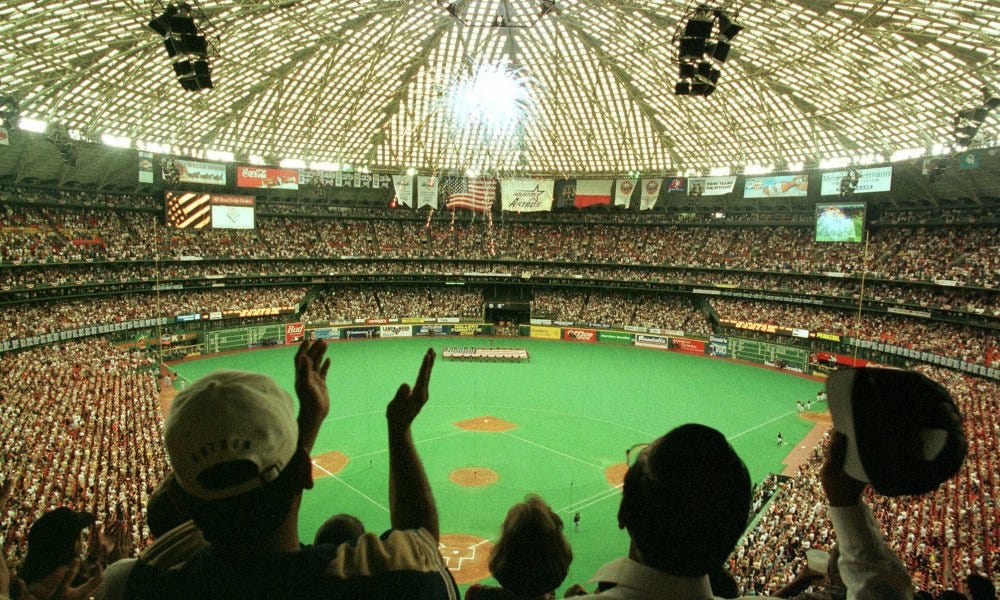
“I played the Houston Astrodome for like 50,000 people and said goodnight, and I thought I’d probably do another concert in the next year or so. I didn't know Wasp would be the last record I’d make, but it was.”

For the EXCLUSIVE EXTENDED EDITION of this article (with 50% more content and info, plus more rare photos!), click here👇
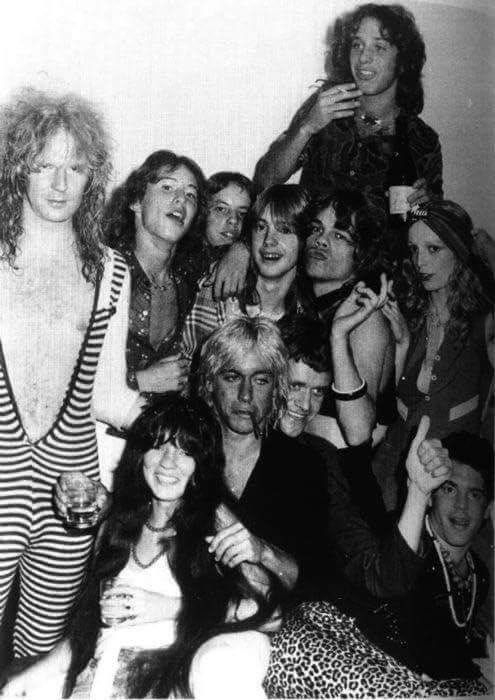
Shaun Cassidy, in the above quote, was reflecting in a 2020 interview with Lyndsey Parker, YahooMusic’s Editor-in-Chief, on what turned out to be his recording career swan song, 1980’s Wasp album, produced by Todd Rundgren. Shaun spent the early ‘70s as a young teen spending countless nights rubbing punk elbows with his favorite British and American rockers. For example:
He signed his recording contract with Curb/Warner Bros. Records before graduating from Beverly Hills High, and released five albums before calling it an eventual quits after Wasp was released to thunderous indifference. We’ll discover how the songs on Wasp were selected, and how and why Shaun chose eventual (2021) Rock’n’Roll Hall Famer, Todd, to produce. We took a deep-dive snapshot of Shaun’s first 5 albums here:
That's Pop'n'Roll: Shaun Cassidy and His 1970s Teen Idol Recording Career
“I'm going to call one of my heroes, Todd Rundgren!” Shaun was talking to Lyndsey Parker of Yahoo! Entertainment in 2020, and recounting his 6-albums-in-4-years pop star recording career that peaked, tee…
Wasp, and Its Resultant Buzz
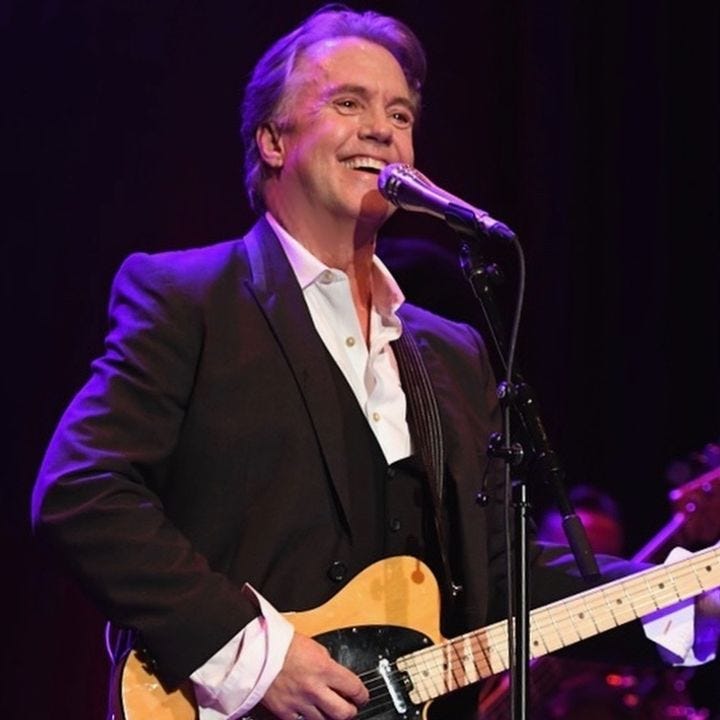
Lyndsey Parker, in her 2020 interview with Shaun, put Album #6, and the players’ rationale for its need to exist into tight perspective: “To say that the new wave album was a departure from what both his record label and fanbase expected would be a massive understatement.
“Produced by the legendary Todd Rundgren [and featuring Todd’s proggy side band, Utopia, backing him up], Wasp boasted a slew of hip cover tunes — David Bowie’s “Rebel Rebel,” Talking Heads’ “The Book I Read,” the Who’s “So Sad About Us” [released as the second single from the album], the Animals’ “It’s My Life,” Ian Hunter’s “Once Bitten, Twice Shy,” even the Four Tops’ “Shake Me, Wake Me” — as well as four fiery, feisty, funky originals written or co-written by Rundgren himself” [including “Cool Fire,” with lyrics by Todd and music composed by Shaun.]
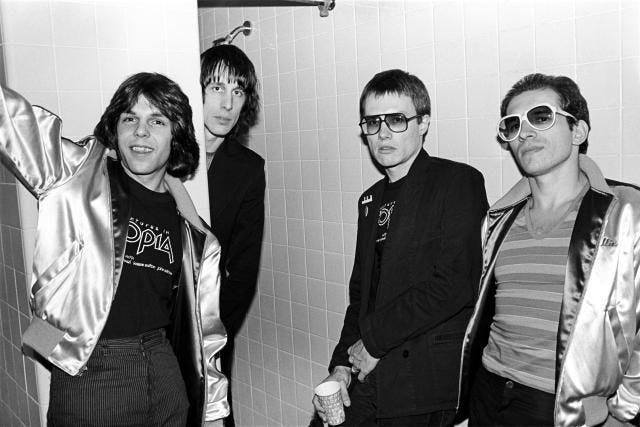
Todd’s Utopia featured (above, l-r) Kasim Sulton on bass, Todd on sax, guitar, bass, and drums, Roger Powell on various keyboards, and Willie Wilcox, drums. All but Kasim sang background vocals.
“The ambitious album was actually a credible attempt by the younger Cassidy to leave his teenybopper past behind, but coming out exactly 11 months before the advent of MTV [on August 1, 1981], it failed to register with fans, critics, or radio programmers at the time.
“To this day, sadly, it remains largely forgotten — even by Cassidy himself, who freely admits that he had to re-listen to Wasp in its entirety, for the first time in decades, just to prepare for this epic interview reexamining its legacy!”
Shaun zeroes in on the songs: “‘Once Bitten, Twice Shy’ [written by former Mott the Hoople lead singer, Ian Hunter] was a song I’d wanted to actually record earlier. So I suggested that, and I suggested doing it in the low register.
“I remember saying to Todd, ‘How high should the key be?’ He said, ‘It should be as high as you can sing it in — and then up a step!’ And that is what we did with every one of these songs. I can hear my voice cracking on some of them; I’m really screaming on a lot of them!
“‘The Book I Read’: I love the song, but when I listen to it, I hear me aping [Talking Heads’] David Byrne, which is never a good idea — as opposed to ‘Once Bitten, Twice Shy’ or ‘Rebel Rebel,’ where I'm not [mimicking] Ian Hunter or Bowie.
“I love ‘Pretending,’ one of the originals that Todd wrote; it feels theatrical, like it could be in a Broadway musical. ‘Shake Me, Wake Me’ is fun because it’s sort of Motown, and yes, I did listen to Levi Stubbs a little bit before I did that — not that I could ever approach Levi Stubbs, who might be one of the best vocalists ever. I think ‘Selfless Love’ is my least favorite track because it feels very self-important. It's about suicide, and I wasn't feeling as dark as that song is.
“So much of Wasp is theatrical and sort of performance-driven — literally character-driven, with different voices on different songs. And that was the road I was on. For 10 years [after Wasp], all I did was work in theater, until I sold my first script in like ‘89 or ’90. And then I started writing television, and that's what I've been doing consistently, ever since.
“For me specifically,” Shaun continues, “my hit records, pop records, were kind of the last days of AM radio. Literally overnight, all my records stopped getting played. Every record of mine was dropped, and I wasn't being played on FM, which was still a relatively new animal and was more album-oriented anyway. So I had no airplay.
“I'd made these two wildly successful albums — the debut album, and then an album called Born Late — and then I came out with a record called Under Wraps, which was my favorite because I did the most writing on that one. But we didn't have a hit single on that album, so the handwriting was kind of on the wall.
“I wasn't a big fan of disco — I liked some records, like the early birth-of-disco records out of Philadelphia, but by the time 1979/1980 came around, it was all rehashing Saturday Night Fever. I was getting incredible pressure to try and make, if not a disco record, certainly a disco-infused record—which I balked at.
“Well, in this scenario, you either decide you are going to commit to a career as an artist, and with any luck to work your way into the Justin Timberlake territory, or you move on. Or you go the third road, which was what I did, which was: ‘I’m going to call one of my heroes, Todd Rundgren!’”
Lyndsey: What inspired you to call Todd?
“Something/Anything? was a seminal record for me. ‘Couldn’t I Just Tell You’ is arguably one of the first great power pop songs. And, I had aspired to make power pop records. I knew that Todd had produced a lot of eclectic acts.
“I’d loved the New York Dolls’ debut album [that Todd produced]. He’d made some really good records for Grand Funk and the Tubes [and XTC and Meatloaf’s Bat Out of Hell]. He was all over the map, and he struck me as kind of like Dave Eggers as a writer. He was doing cool new things and being deconstructionist and ironic about all of it, all at the same time.
“I wanted to be pushed, and I wanted to be inspired. And so I told the record company, ‘I want to make a record with Todd and see if he’s game.’ We had a great meeting at my house and Todd said, ‘Yeah, sure. Let's do it!’”
When asked, by Lyndsey, how he adjusted to this new musical direction with Todd, Shaun responded: “I didn’t know what the album would be. I said, ‘Will I be writing all the songs? Because I’ve been writing a lot more.’ He said, ‘No, no, no, no, no, you don’t have to do that. You don't have any super-legacy as a songwriter to uphold. You want to be an actor. Let’s make a record that leans into that, pushes you into characters.’
“Some of the record I think is really good. Some of it I think is goofy. Some of the tracks, I think, overextend — I don't think anyone should be [covering] David Byrne! But again, 40 years after the fact, looking back at this 21-year-old kid, I’m impressed with the scope of it. I’m impressed with the commitment I hear in it. I don’t remotely regret making that record. I’m glad I did.”
Lyndsey: What was the reaction from your record company(Curb/Warner Bros.)? This was hardly the commercial product they were used to.
“I remember we had a listening party at Warner Bros., and Russ Thyret, a very famous promotion man who later ended up running Warner Bros. [1995-2001], said, ‘Um, well, it’s interesting. I don’t know what your fans are going to say and I don’t know what radio is going to think, but I certainly think the best single to go with is ‘So Sad About Us’ — which was an old Who song that we recorded. I said, ‘Yeah, but that’s so poppy; it sounds like my other records except maybe a little harder and edgier. I don't want to do that.”
“Let’s do ‘Rebel Rebel.’ I was a huge Bowie fan and I listened to ‘Rebel Rebel’ when it first came out [1973], on like English [import] records that you couldn’t even get in America [well, you could, Shaun…you just had to find a retail record store who could order and carry imports!]. Plus, a few weeks later, RCA released “Rebel Rebel” stateside.

“So I basically forced Warner into going with ‘Rebel Rebel’ [as the lead single]. And maybe that was a horrible idea, because nobody played it. ‘So Sad About Us’ actually might have been a better transition from my previous records.”
He’s right. Similar to the cover choices from Shaun’s debut album, “So Sad About Us” (originally released by The Who in 1966) was, by 1980, a largely forgotten, but still familiar, hit in the American music consciousness. Bowie’s “Rebel Rebel,” originally released by an artist whose mega-star was rising rapidly, was only half-a-dozen years from its rather substantial explosion on AM and FM radio.
“So Sad About Us,” then, would’ve been a shrewd lead single choice, as it would’ve found a new, younger audience, as well as hitting the thankful ears of their older siblings who remembered the Townshend classic.
Warners followed-up Shaun’s “Rebel Rebel” with a single release of “So Sad About Us” (note billing as “Shaun Cassidy with Todd Rundgren & Utopia”). Neither single charted in any of the half-dozen countries in which they were released:
“I kind of did the same thing with Todd on Wasp [as I had done on the earlier radio-friendly pop material]: I handed the reins completely to him and I said, ‘What do we do here?’ It freed me up to do everything, and it gave me license to be good and license to be bad.
“And I think the record reflects that: It was the joy of trying something new and pushing myself and testing myself, and being more excited than worried about outcome. I wasn't really ever that invested in outcome. I just wanted to have the experience and the process. And I still do.”


It's amazing to me how many of my favourite artists Todd Rundgren has touched. I also notice how much I'm drawn to theatrical musicians and musicians who are willing to stretch themselves. So looking at it from that lens, no wonder Shaun became someone I was drawn to. I wonder if I sensed there was more there then the pop prince he first hit the charts with. Then again, I was 13 years old in 1980 so I was probably sensing other things!
I'd never heard of him. Looking forward to reading this fully