


🐰Audio Autopsy, 1970: Before Dr. Demento, He Was Warner Bros. Records PR Writer, Barry Hansen
Years before "Weird Al" sent him a life-changing cassette, Dr. Demento interned at Burbank's Label of The Bunny.

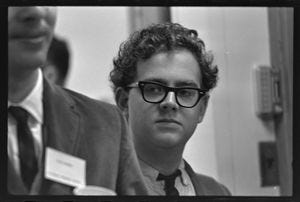
Inspired by a suggestion by of Goatfury Writes.
Enter the Good Doctor’s First Gig
I first became aware of Dr. Demento about the same time he adopted that nom-de-tune, but had no idea he had that radio-based persona (until several years later). I was in Houston, TX, and in high school in the early ‘70s (age 15 in 1970, for a point of reference).
At the time our paths crossed, he was merely Barry Hansen, who had recently earned his master’s degree from UCLA, in ethnomusicology, folk music division. He wrote his master’s thesis on the growth of blues music in the 1940s.
While he toiled out of the promotions and/or PR division of Warner Bros. Records in Burbank in the early ‘70s, I was voraciously reading his work in two printed elements produced by The Label of The Bunny (a nickname for the label whose corporately-attached animation studio gave us Bugs Bunny, Daffy Duck, and all our favorite Looney Tunes for decades….I wouldn’t be at all surprised if Barry was the one to have come up with that “Label of the Bunny” phrase)!
As far as I can determine, he likely worked there from about 1971-1975 or so. Somewhere in that time span, too, was the overlapping of his L.A.-based KPPC-FM/(Pasadena) Dr. Demento radio show, about which I knew little, and I’m not even sure it was syndicated in Houston until a bit later (1974, to be exact, with national syndication by Westwood One Radio Network spanning from 1978 through 1992).
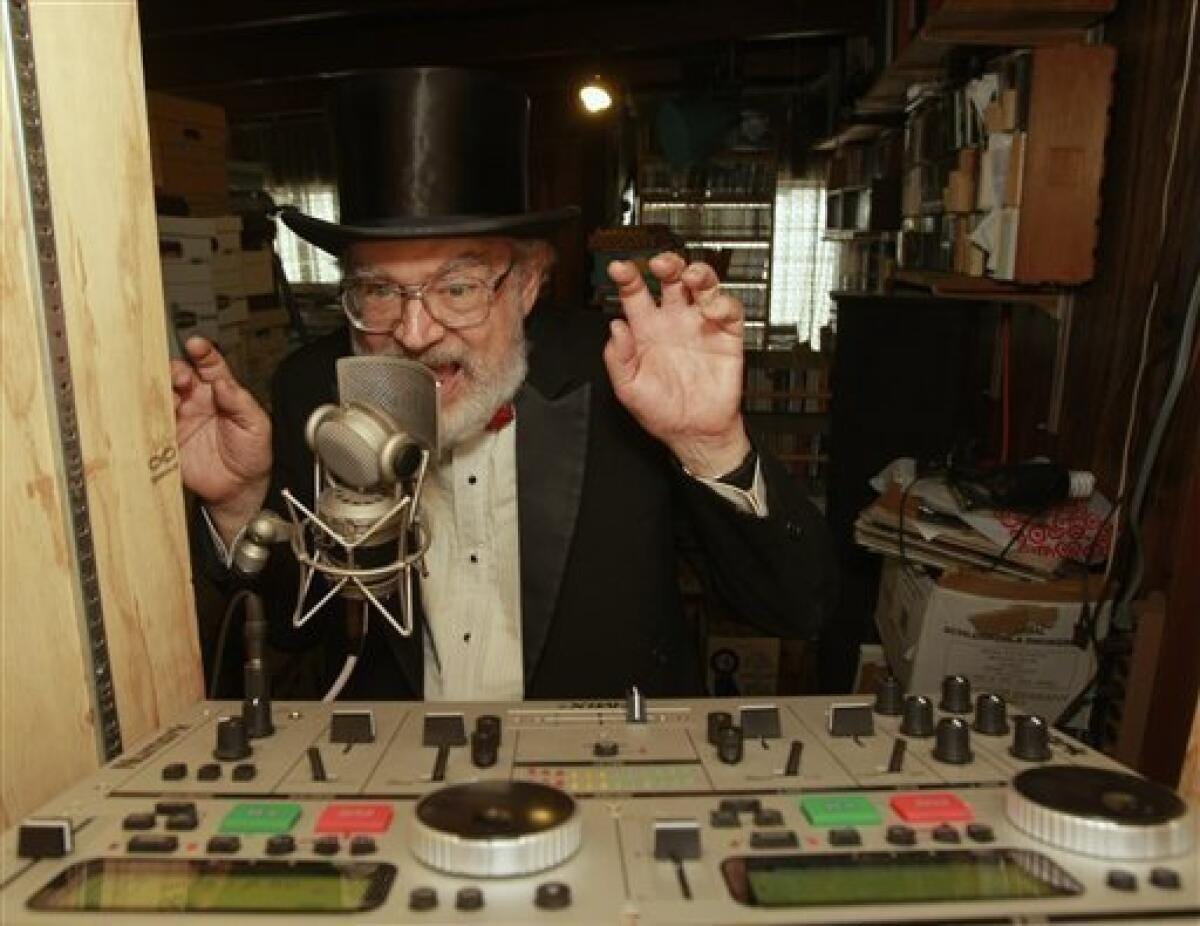
Broadcast syndication of the show ended on June 6, 2010, but the show continues to be produced weekly in an online version.
Hansen’s job at Warner Bros. seemed to be solely a writing one in those early- to mid- ‘70s. He was known to have written the little bio blurbs for the artists who landed on the label’s storied “two-fers,” of which I managed to collect virtually all…maybe two-to-three dozen over the span of their releases.
Actually, the job of collating and annotating these “Loss Leaders” fell, initially, to longtime Warners exec, the late, great Stan Cornyn (1933-2015), who worked for decades for the label, but was in charge of the label’s Creative Services (from 1960 through the late ‘70s) during the time of these amazing sampler albums.
He passed the annotating gig on to Hansen sometime in the early ‘70s. Longtime Warners Art Director, Ed Thrasher and his team, were responsible for the creative artwork on each.
Some examples:


Each two-LP-set operated as a sampler album, with one to two tracks from recent releases of the label’s (and affiliates) vast roster: The Doobie Brothers, Alice Cooper, Frank Zappa, Maria Muldaur, Bonnie Raitt, Montrose, Roger Saunders, M. Frog, Van Morrison, Joni Mitchell, Jethro Tull, Black Sabbath, James Taylor, Neil Young, et al!
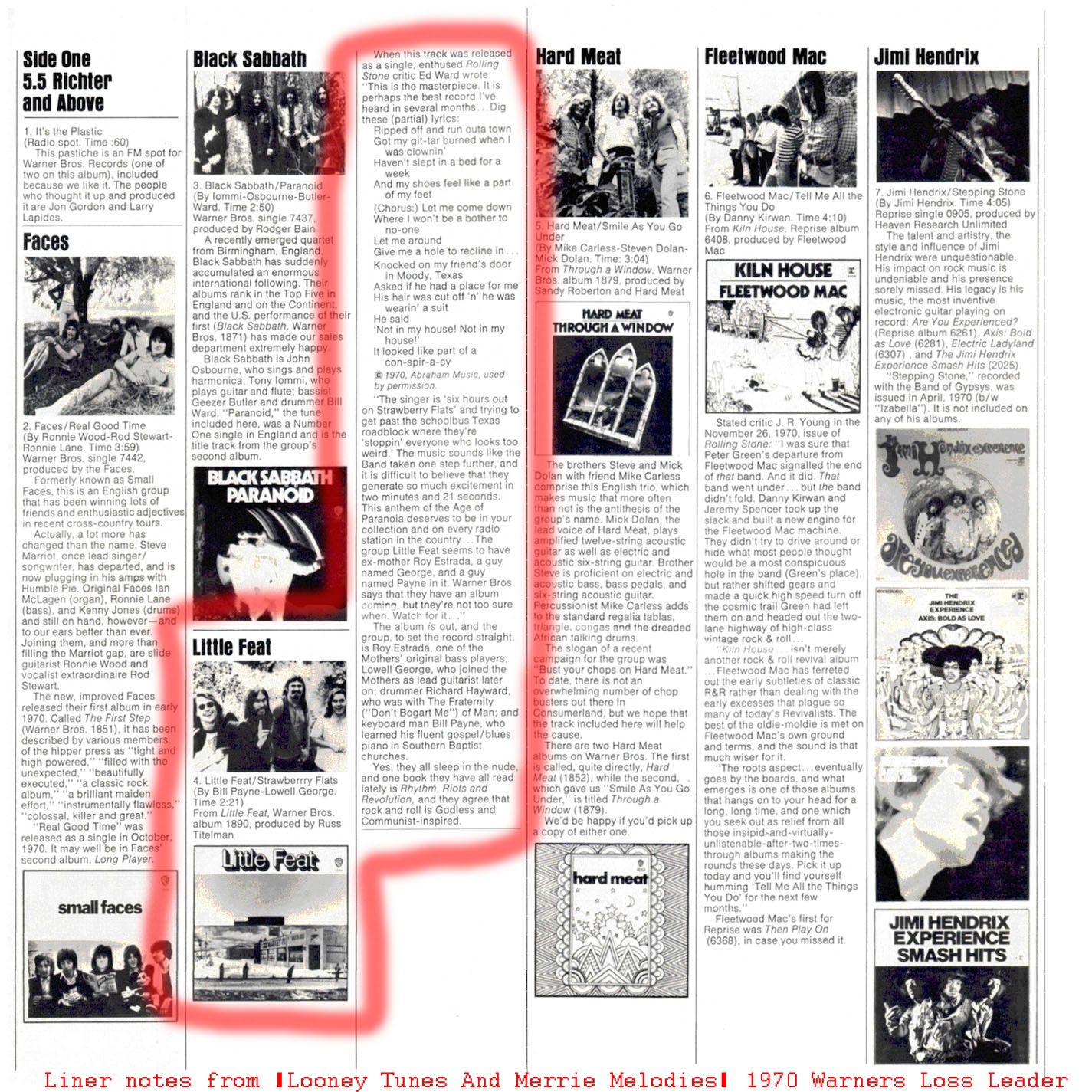
The label’s grand hope for these “Loss Leader” two-fers? That you’d be willing to pop for the 2 bucks it would take to get the sampler in the mail, end up loving one, two, or eight new artists and their new product, and then you’d happily trundle down to your local record store, and buy your newly-discovered albums’ sounds at regular retail price!
The cost of pressing, printing, and assembling the samplers, they hoped, would be more than offset, now, by the scads of newly-purchased product that would otherwise not have been heard.

Keep reading with a 7-day free trial
Subscribe to Front Row & Backstage to keep reading this post and get 7 days of free access to the full post archives.