


Yacht Pop: Like Yacht Rock, Only Funner!
As it often does in our ear-candy ocean of rock’n’pop, the dynamism runs deep in this trio of Yacht Pop Anchors that coulda/shoulda been hits. It’s doubtful record companies did little more than tolerate these songs on an album, much less think they’d Top any 40!
I wouldn’t be the first to assert their corporate-suit/C-Suite cluelessness in that regard! Start your own ‘70s Top 40 AM radio station with these, and own your key day-part and rock your station’s Arbs!
A couple of previous Yacht Pop Anchors:


Todd Rundgren “Izzat Love?,” 1974
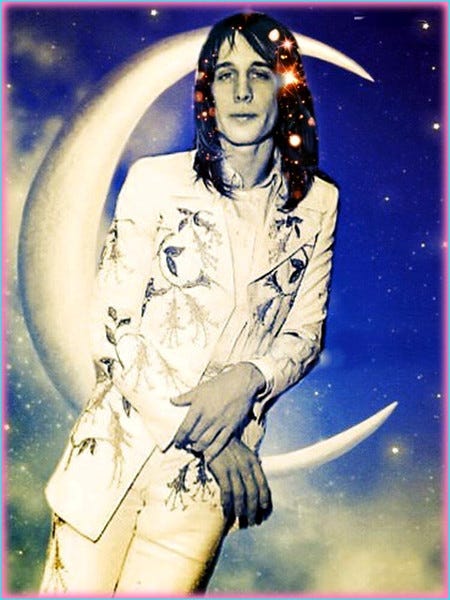
From 1974 and his double-LP Todd album (the one with the huge poster your name coulda been on if you sent in the postcard from A Wizard, A True Star the year before…like I did)! “Izzat Love?” of course, was written and produced by Todd, with all instruments and voices executed by Rundgren.
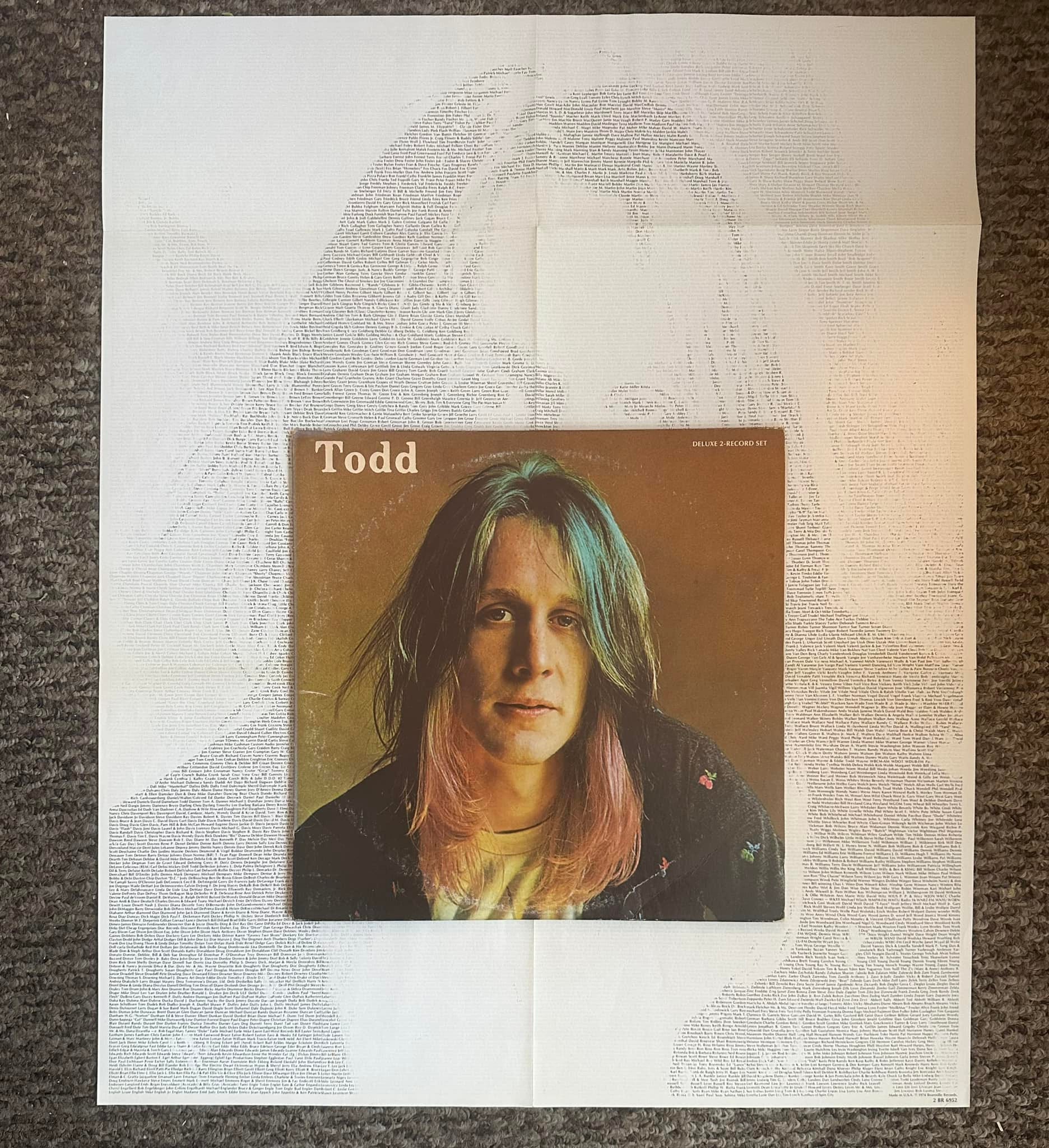
“Izzat Love?” is typically Todd-melodic, but checks in at just under two minutes! It features a modulation, and a wacky ending tape-spin that niftily slammed into the next song on the LP (Perfect for cassette mix tapes! Your friends would say, “Hey! How’d you do that?”)
The only cover extant belongs to one Jamie Hoover (1991), whose voice uncannily resembles the youthful timbre of Utopia’s Kasim Sultan:

Dean Friedman, “Ariel,” 1977

This one was recommended, a couple years ago, by Rick Ellis of Too Much TV Newsletter. In a comment, he said this:
“The thing that always amused me about ‘Ariel’ is that it included references that I didn’t quite understand at the time, including the mention of her being with the ‘Friends of BAI,’ which I always thought was some local Jewish group. Turned out the reference was to local radio station WBAI (Pacifica Radio in New York City). Also, as a teen I was always impressed that he could take her out for fast food and still end up getting lucky. Apparently playing in a rock band really was helpful back then!”
“Ariel,” which Dean Friedman wrote, reached #26 on the U.S. Billboard Hot 100 chart, and #19 in Canada in 1977. Rob Stevens produced for Lifesong Records. Notable is the song’s bass player, Tony Levin, who would go on to work with Peter Gabriel, and spend a couple stints with King Crimson.
Songfacts has this to say about Dean and “Ariel”: “The song takes place in Paramus, New Jersey, where the singer/songwriter grew up, although he was living in the Bronx when he wrote it. Dean told us that Ariel was ‘an amalgamation of all these cute teenage girls in peasant blouses I had a crush on growing up in Paramus.’
“Friedman’s brother was a member of [public radio WBAI] and did indeed sit by the waterfall in Paramus Park collecting quarters for the station. Other lyrics came directly from Friedman’s life as well: His roommate in college had a VW van, and he played his share of gigs in the American Legion Hall.
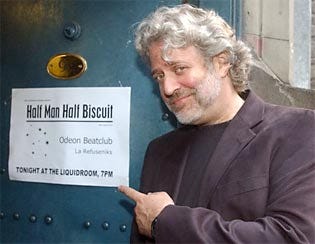
“In this song, Ariel is from ‘the other side of the Hudson.’ For the Paramus area of New Jersey, that would be Yonkers or The Bronx on the other side of the Hudson River. Said Friedman, ‘You’re conscious that there are two sides to the Hudson. I was also conscious that where I grew up was very much this side, supposedly idyllic suburbia, the home of shopping centers, the Garden State Plaza, and the Bergen Mall.”

Phil Collins & Frida, “Here We’ll Stay,” 1982

Two of Atlantic Records’ (U.S.) premier acts in the early-’80s merged to a degree, as Genesis singer/drummer Phil Collins joined ABBA’s Frida (Anni-Frid Synni Lyngstad) in 1982 for a Collins-produced (with Hugh Padgham) Something’s Going On album.

“Here We’ll Stay” was written by Jean Roussel (above) and Tony Colton (below)….

….and was first recorded by British singer Sonia Jones for the UK pre-selection for the 1980 Eurovision Song Contest:
According to Remko van Drongelen’s 2022 book, Frida Beyond ABBA, “the track was originally a duet with Frida and producer Collins, which is included in the album as the closing track.”
Punchy horn charts are by Collins’ go-to horn section, Earth, Wind & Fire’s Phenix Horns, and longtime Genesis touring guitarist, Daryl Stuermer, joins the duo, as well. Peter Robinson arranged the horns and the Martyn Ford Orchestra’s strings:
“An alternate duet mix with missing chorus vocals and an added echo in the verses was mistakenly released on the Swedish cassette tape and the first pressings of the 2005 reissue of the album. The track was released in April 1983 via Polar Music as the album’s fourth and final single, re-recorded as a solo version by Frida.
“With Collins not wanting to be associated with the single [with his new solo career ascending], Frida recorded new vocals over two days in March 1983 over a different backing track with added strings and diminished piano parts, as well as a heavier Swedish accent, compared to the album version.
“The music video was recorded in April 1983, directed by frequent ABBA collaborator, Lasse Hallström (1985 Academy Award Best Director nominee for My Life as a Dog):

As Neural Foundry says, what makes "Ariel" so great are the specific details, many of which made me laugh out loud, "I said hi/ she said Yeah, I guess I am" being one that comes to mind. I remember when Rick Ellis mentioned this two years ago (now that you mention it)! I can't believe that you remember, at your advanced age!😂 It definitely reminds me of Billy Joel, but with enough to give it its own personality.
I didn't remember "Izzat Love," but it's unmistakably Rundgren.
And Eurovision sure has come a long way (or regressed to some people) since 1980!
I can't believe Phil Collins was smoking while recording "Here We'll Stay." Or at least during the fake recording of it. I really only knew "there's something going on" from their work together. I can't say that this song does anything for me.
I love these Yacht Pop Anchors, though, according to the Yacht or Naught scientific scale, only the first two here qualify as Yacht Pop.
I’ve met Dean Freidman on several occasions. A good buddy of mine roomed with his brother in college. I’ve seen him play many times, especially when he was opening for Steven Page. An unfailing pleasant fellow.