


Audio Autopsy, 1976: Boz Scaggs "Silk Degrees" & Helen Reddy "Music, Music" LPs: Both Feature Toto & Producer Joe Wissert
History remembers the hits on "Silk Degrees." History has forgotten the Helen Reddy album that was produced, weeks later, by the same guy, and featured the same Toto players! What are we missing?🤷♂️

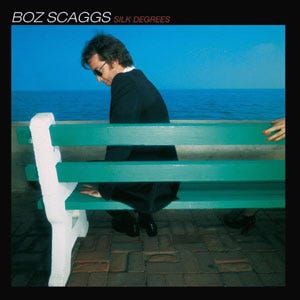
Silk Degrees (above) was recorded in September and October 1975; Music, Music was recorded the following spring, in February and March 1976.
The former (on Columbia Records), Boz Scaggs’s 7th solo album, turned out to be a #2 album, spending 115 weeks on the Billboard 200 album chart. It has been certified five times platinum by the RIAA and remains Scaggs’s best selling album.
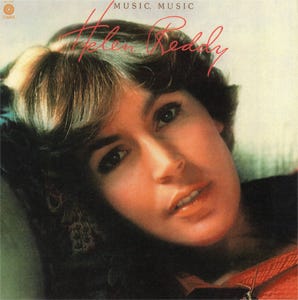
The latter album, for Capitol Records, was Reddy’s 8th studio album, and was certified gold by late that Bicentennial summer, topping out at #16 on the album chart:
Opening Joe Wissert’s Date Book
Three months transpired between producer Joe Wissert wrapping production on Silk Degrees in October ‘75, and breaking the seal on the first tape reel box on Helen’s Music, Music. In fact, Columbia was just releasing Silk Degrees as Wissert and Reddy entered the studio in February ‘76!
If Joe “squoze” in another studio date between the two, it’s doubtful he had at his disposal the talents of most of Toto, who were just a scant year away from forming Columbia’s newest record-setting, hitmaking Grammy winners.
Yet, Toto was present for both Wissert-produced albums for Boz and Helen! Most of the planet has heard one album, while the other has gone largely unheard. We aim to change that, and take a look at some similarities and differences in the two albums…call it a Vinyl Venn Diagram.
“Toto, I Have a Feeling We’re Not Doing Sessions Anymore (In Kansas or Anywhere Else)”
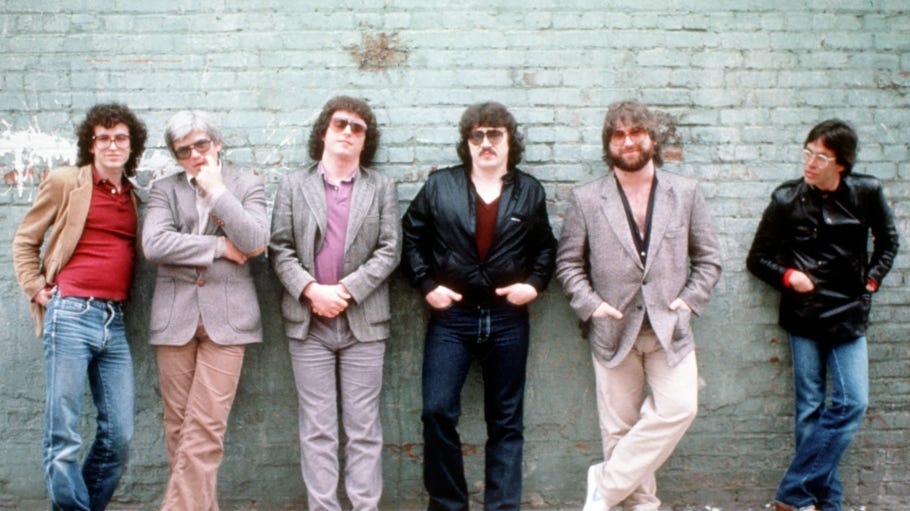
Virtually all the players who became Toto were veteran session players prior to forming the band in 1977. Singer Bobby Kimball was in a short-lived band on Columbia around 1975, S.S. Fools. Singer/keyboardist, Steve Porcaro, did session work, but post-Toto.
Guitarist Steve Lukather and bassist, David Hungate, were veteran session players, as were keyboardist David Paich and drummer Jeff Porcaro. ‘Twas Paich and Porcaro who decided to form a band, and recruited the other four. The two sessions, then, for Scaggs and Reddy were two of their last sessions before entering the studio themselves (in October 1977) for the Columbia Toto debut, released a year later.
Related:

Listed as players for both Silk Degrees and Music, Music are:
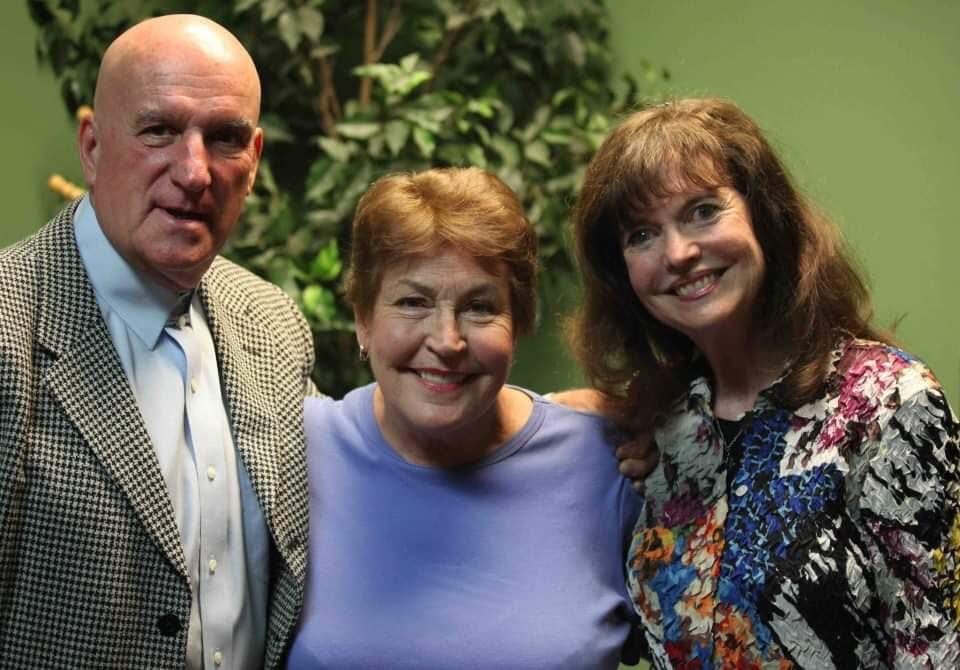
David Paich on various keyboards, David Hungate on bass, and Jeff Porcaro on drums. The late Papa Porcaro, drummer Joe (who passed away in 2020), only appears on the Scaggs album, listed as a percussionist on “What Can I Say” and “Jump Street.”
To be honest, and this may be the key to its ultimate success, but the Toto contingent had a larger piece of “ownership” in Silk Degrees than it did on Music, Music: The band members played on more SD songs than they did on MM, plus David Paich had a hand in co-writing half of the ten songs (with Scaggs) on the Boz disc. He had no such input on the Reddy record.
As it seems to so often do in pop’n’rock music-land…it all comes down to material (see Lynda Carter).
Toto and the Wizard of Boz
It was the Paich/Scaggs compositions, alone, that lifted the Silk Degrees album off its PVC fanny, catapulting it up the charts. In fact, the only singles released off the album were Paich/Scaggs works: “What Can I Say” (peaked at #42), “Lowdown” (a #3 hit), “It’s Over” (#38), and “Lido Shuffle” (#11). “Jump Street” remained as the lone Paich/Scaggs-penned album-only track.
Scaggs reportedly wrote “Jump Street” 10 minutes before recording it, only having a rough idea of the lyrics. He stated that he’d scream out words that “worked phonetically.” This seems to imply that Paich, who composes on a favorite piano, was the one who composed most, if not all the song’s music. At any rate, Scaggs once told Songfacts that “David Paich is my favorite all-time collaborator.”
For “Lido Shuffle,” Scaggs disclosed to Songfacts that “it was a song that I’d been banging around. I took the idea of the shuffle [from] a song that Fats Domino did called “The Fat Man” that had a kind of driving shuffle beat that I used to play on the piano, and I just started kind of singing along with it. Then I showed it to Paich and he helped me fill it out. It ended up being ‘Lido Shuffle’.”
Rare, candid footage of a Silk Degrees session, in-studio, of Boz and players (including Toto) of “Lido Shuffle,” plus backstage, prepping for SD-era concert + live footage:
As for “Lowdown,” “That was the first song that I wrote with those Toto guys, with David Paich in particular. When we first met, [Wissert] suggested we try to write a song or two together.
Scaggs continued: “We took off for a weekend to this getaway outside of L.A. where there was a piano and stayed up all night banging around ideas. We hit on ‘Lowdown,’ and then we brought it back to the band and recorded it. We were just thrilled with that one. That was the first song that we attempted, and it had a magic to it.”
Scaggs has been quoted by The Toronto Star as saying that the success of “Lowdown” was “an accident,” and that, even though it was their favorite from Silk Degrees, he and the others thought there “wasn’t a chance in hell” that it would be released as a single.
Wrecking Crew guitarist Louie Shelton, who played on the Silk Degrees sessions (including “Lowdown”), recalls the making of the song:

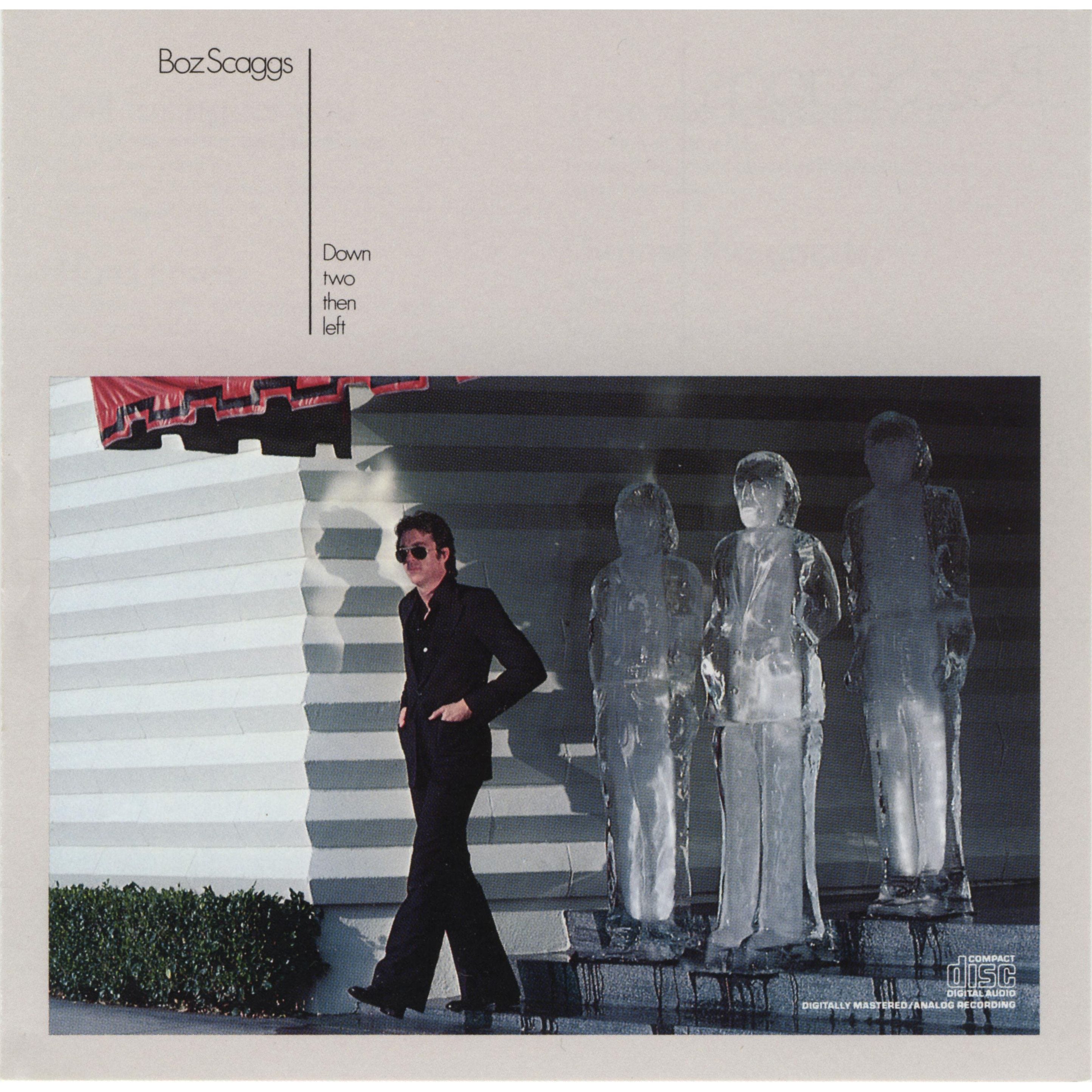
Down Two Then Left, But Watch Out for the Brick Wall
It’s key to note that the Boz Scaggs follow-up to Silk Degrees, 1977’s Down Two Then Left (shown above), as desperate as Columbia had to be to duplicate the Silk Degrees magic and success (heck, they returned to Hollywood Sound, and made sure to hire Wissert to knob-twiddle again!), had to resign themselves to the fact that the keys to the SD success (a songwriter and some players) were already in another studio….as Toto.
Boz, bless him, even tried to replicate, if not duplicate, the compositional magic himself, by hiring another accomplished veteran singer/keyboard session player with whom to collaborate, Michael Omartian:
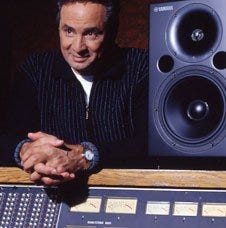
In fact, we don’t have to tell you how many songs the two co-wrote for Down Two, do we? Exactly five of the album’s ten…y’know, like before, with Paich! Only two songs (one a Scaggs/Omartian co-write) were released as singles.
In fact, Omartian, a well-traveled, respected and seasoned pro (and solo recording artist in his own right), even played on the RCA Records sessions for FR&B’s Stephen Michael Schwartz in 1974, joining fellow first-call session cats, guitarist Larry Carlton, drummer Jim Keltner, native Houstonian Wilton Felder on bass, and singer Kim Carnes:
Helen Reddy: Music, Music
Summer 1976 saw the Capitol release of the late Helen Reddy’s (she passed away at 78 September 2020) 8th studio album, Music, Music, her third straight with Joe Wissert at the helm, after a consecutive three with longtime (late ‘60s thru mid-’70s) Neil Diamond producer Tom Catalano (founder of Tom Cat Records, a short-lived RCA affiliate in the ‘70s).
Clearly, Reddy enjoyed leadership continuity, if not predictability. For perspective, it had been four years since her breakthrough “I Am Woman” single.
These general traits (continuity and predictability) might’ve contributed to the dearth of reliable material Wissert and Reddy had at their disposal for the final track listing. Absent from these sessions were the elements the producer knew he could count on for the Scaggs sessions: Solid, dependable songwriting from the same two guys: If not Paich and Scaggs on five songs, then Scaggs, himself.
Tunefully bowing to the ladies, of the ten songs on the album, seven were either solo compositions or co-writes by women whose talents Reddy was eager to celebrate.
J. Scott McClintock broke down the material for AllMusic: “There are breezy, Bacharach-ian excursions (‘Gladiola,’ written by Alan Gordon, who co-wrote the Turtles’ “Happy Together” and 3 Dog Night’s “Celebrate”), ‘You Make It So Easy’ (Carole Bayer Sager and Reddy)…
….“Bluesy numbers (‘Get Off Me Baby,’ by feminist singer/songwriter, Holly Near, and Jeff Langley, and ‘Ladychain,’ by Marcia Waldorf), light country (‘Mama’ by Harriet Schock), jazzy ballads (film music composer, John Williams’ and singer/songwriter, Paul Williams’ torchy contribution, ‘Nice to Be Around’), and even a little Philly soul (with the Goffin/King ‘I Can’t Hear You No More,’ Reddy’s lead single from the album).
“Hold Me in Your Dreams Tonight” by Marie Cain, who had just released her 1976 Living Alone album on Columbia, was also featured on Music, Music.
AllMusic again: “Reddy tackles them all with admirable gusto and shows a grittier side than she had on her previous albums. Looking at the songwriting credits, it is obvious that there are some heavy hitters contributing here.”
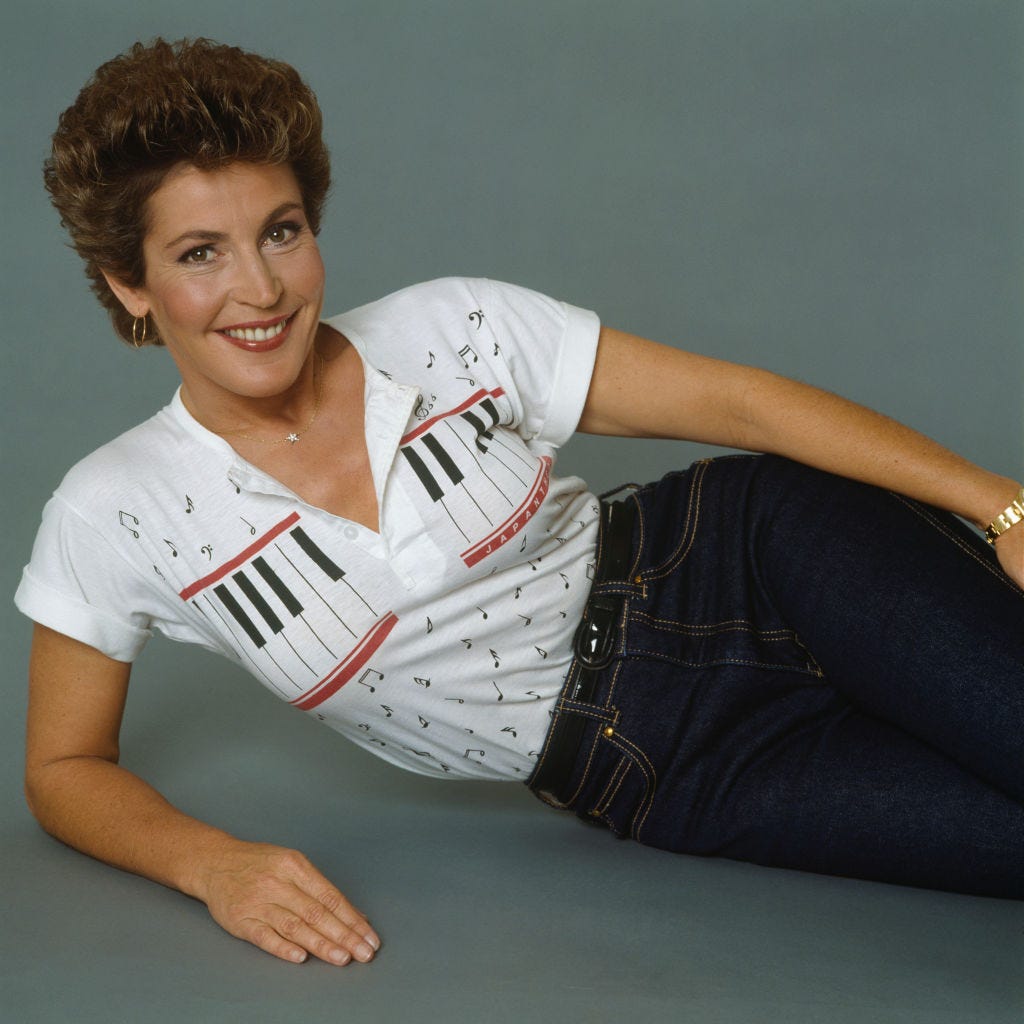
According to Billboard, Reddy unhappily recorded “I Can’t Hear You No More” at the strong suggestion of Capitol, who hoped a disco-influenced song might boost her career. Ironically, though, “I Can’t Hear You No More” became a #1 Easy Listening (MOR) hit, Reddy’s eighth and last, and it was also her next-to-last Top 40 hit with a #29 peak on the Billboard Hot 100 (Cash Box ranked the track with a #41 peak).
Players on the track were all, like the Toto members, longtime reliable session veterans:
Harvey Mason – drums
Dean Parks – guitar
Scotty Edwards – bass guitar
Larry Muhoberac – piano
Music, Music was cited in 1977 by Reddy as a personal favorite from among her albums.
The only two songs on the album that feature the three Toto players (David Paich on piano, Jeff Porcaro on drums, and bassist David Hungate) are the title track, written by singer/songwriter/recording artist, Pamela Polland (Columbia Records, 1972), and the other of two Alan Gordon tunes, “Music is My Life.”
Session player (and eventual Little Feat member) Fred Tackett, was the guitarist on both, while veteran session percussionist, Bobbye Hall, played congas on “Music, Music,” and British jazz percussionist, Victor Feldman, played percussion instruments on “Music is My Life.”
AllMusic ties it up: “After a long string of streamlined, ultra-successful albums, [1975’s Wissert-produced] No Way to Treat a Lady, and (especially) Music, Music provide Reddy with a chance to move a bit outside of her strictly ballad-oriented repertoire and show her to be a commendably versatile vocalist.”
Always loved Silk Degrees—bought it when it first came out—my first exposure to Boz. I didn’t know Papa Joe played on it! Jeff Porcaro was just so ridiculously available and in-demand. Blows me away to this day how prolific! Oops maybe I should say “blow” when I reference him 🙄
True story no one asked for: When I was in 3rd grade (early 80's), we were assigned pen pals in North Carolina. I asked all the boilerplate questions any 8-9 year old would; what's your favorite color? Favorite food? Favorite band? When the answers came back, one of them was "Boz Scaggs." I was pissed, convinced he'd made it up. My dad laughed, and talked me down explaining that, yes, Boz Scaggs was both a real person and had some hit records.
As for the record itself, it holds up well. I prefer Rita Coolidge's version of "We're All Alone," but that's mostly because I think Scaggs does upbeat songs much better than ballads. If I ruled the world, "Georgia" would've been a smash hit. It's my favorite on the record.